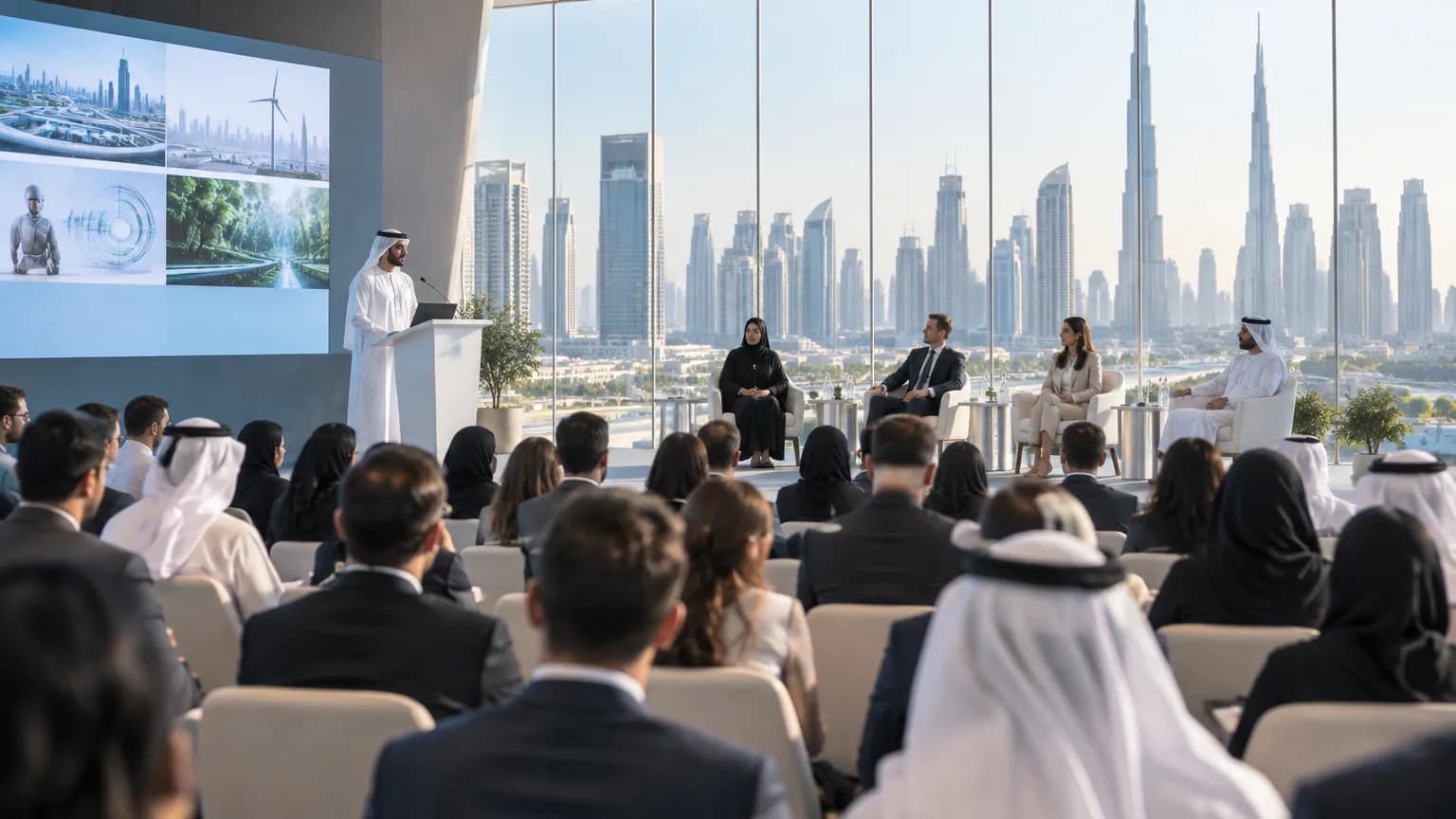
The Dubai Future Platform wrapped up the Dubai Future Week 2026 initiative with an interactive workshop for 500 experts and leaders from five vital sectors. The workshop brought expertise together to plan strategically and draft practical initiatives that strengthen the emirate's readiness for rapid change.
The initiative included 100 teachers, 100 field response specialists, 100 investors and entrepreneurs, 100 economic and financial experts, and 100 engineers and urban planners. The gathering combined diverse expertise to develop a shared vision for the emirate's future.
The workshop used an interactive approach to turn future concepts and projects into ideas and initiatives that can be put into practice. It drew on the vision of Sheikh Mohammed bin Rashid Al Maktoum, Vice President and Prime Minister of the UAE and Ruler of Dubai, to make the emirate a global model for future city builders.
Three Pillars for Vital Sectors in Dubai
The discussion sessions covered three main pillars. The first focused on anticipating the future of the sectors in line with the emirate's strategic direction. Participants tracked expected shifts that will directly affect residents' lives and vital services. They also defined the roles each sector must play to support development targets.
The second pillar examined the main challenges and obstacles that could slow progress. Participants drew on previous field experience in their discussions. The approach underscored the need to use qualified expertise to anticipate potential challenges and keep Dubai's excellence sustainable and its emergency readiness constant.
The third pillar focused on the practical tools needed to turn future ambitions into tangible achievements. Participants stressed the need for joint work and knowledge-sharing among various entities. This collaboration helps build broad strategic partnerships that move future concepts quickly into implementation.
Sector Collaboration for the Desired Vision
Attendees discussed education, capacity building, talent development and diverse skills. They also addressed the need to update infrastructure for field response systems and create real opportunities for the entrepreneurship ecosystem. Participants analyzed the rapid pace of change in economic conditions, as well as urban planning and architectural trends. The discussion reflected the connected structure of the various sectors.
The dialogue also set out the need to share expertise and develop practical solutions to improve sectors and accelerate their development. Participants called for effective responses to reliable recommendations to deepen integration among entities. This creates an environment ready to implement smart initiatives that meet future aspirations.
Various field entities pledged to meet their practical commitments over the coming year to serve the emirate's future goals. This commitment will earn them the title of Dubai Shapers. The title recognizes their efforts to support innovative ideas for growth and stay ahead of basic needs. These efforts ensure citizens' quality of life and develop essential services to meet their expectations.
Artificial Intelligence and Acquired Expertise
The event closed by stressing the need to integrate artificial intelligence more deeply across various fields. Participants highlighted the importance of expanding joint work across diverse disciplines. They also emphasized the use of modern technology to turn ambitious visions into practical initiatives that strengthen competitiveness among sectors.
The workshop emphasized the need to unite expertise, make use of competencies and turn ideas into applicable projects. This approach reinforces the emirate's position as a leading global destination for driving development and shaping the future.