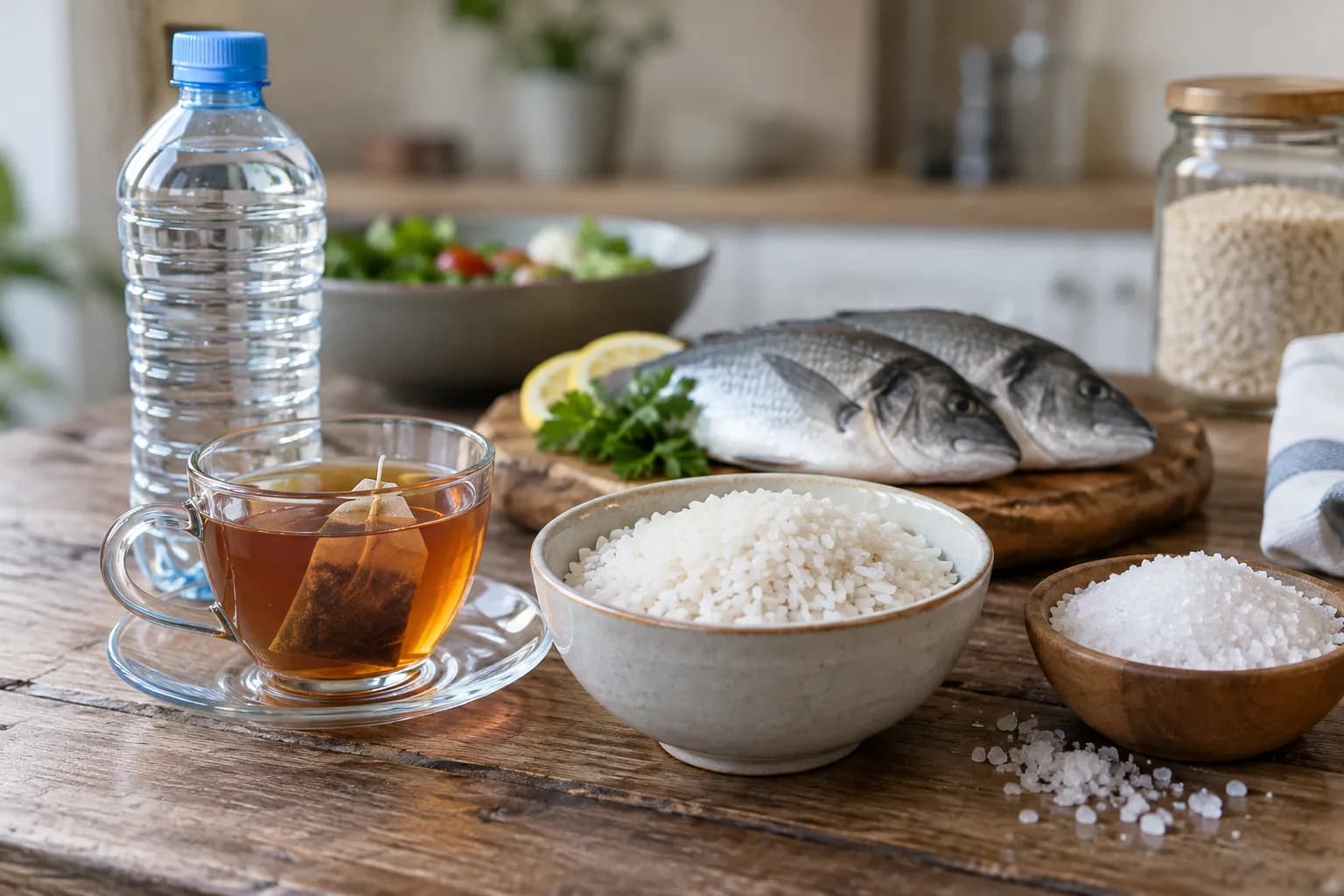
Plastic pollution is no longer limited to the environment and oceans; it has extended to the foods and beverages consumed daily by humans, with mounting scientific evidence of microplastics in several food products, including tea, bottled water, fish, rice, and salt.
Recent scientific reviews, highlighted in a report published by the British newspaper The Times, have shed light on five common sources through which humans can be exposed to tiny plastic particles, known as microplastics.
These particles are defined as plastic pieces smaller than 5 millimeters, and scientific studies have detected them in human blood and tissue samples. However, the potential health effects of exposure are still under study, and the extent of their danger to human health has not yet been determined.
Given the prevalence of these particles in some food products, a set of simple daily measures can be followed to help reduce exposure to them.
1. Tea bags: Plastic particles with hot water
Some tea bags made of plastic materials are a potential source of microparticles, as they can release large numbers of them when exposed to hot water.
A study published in the journal npj Science of Food, conducted by researchers from Recep Tayyip Erdoğan University in Turkey, indicated that a cup of tea prepared using certain types of plastic bags may contain between 555 and 2,498 plastic particles, compared to about 0.3 particles when using loose-leaf tea, according to the study's conditions.
To reduce the likelihood of exposure, bags can be replaced with loose-leaf tea using a metal strainer, or by choosing types of bags that manufacturers confirm are free of plastic components.
2. Bottled water: Thousands of particles in every liter
Research using advanced imaging techniques has revealed the presence of large numbers of microplastics and nanoplastics in bottled water.
According to one study cited in the report, the average number of detected particles reached about 240,000 per liter of water. The source of some of these may be the plastic bottles and their caps, along with the bottling and storage processes.
Potential exposure can be limited by relying on tap water when it is safe and drinkable, using appropriate filters when needed, and preferring water bottles made of glass or stainless steel.
3. Fish and shellfish: Plastic transfer through the food chain
Some seafood represents another potential source of plastic particles, especially shellfish like mussels and oysters, which obtain their food by filtering large amounts of water, potentially leading to the accumulation of some pollutants in their tissues.
These particles can also be found in the digestive tracts of small fish that are consumed whole, such as sardines and anchovies.
The report advises diversifying dietary protein sources and removing fish innards before eating them, while continuing to benefit from the nutritional value of seafood.
4. Salt: An unexpected source of plastic particles
The detection of microplastics has not been limited to beverages and seafood; it has also included various types of salt used in cooking, whether sea salt or mined salt.
These particles may reach the salt as a result of contaminated water used in its production, or during the manufacturing and packaging stages. Additionally, some plastic salt grinders can contribute to the release of microparticles during use.
To reduce this possibility, it is preferable to buy products from reliable sources and use grinders made of glass or metal instead of plastic ones.
5. Rice: How does plastic reach one of the most consumed foods?
Rice is a food source that can be exposed to microplastic contamination, as it may be transferred through polluted irrigation water and soil, or during processing and packaging operations.
The report stated that some samples of processed rice recorded microplastic levels reaching 13 milligrams per 100 grams.
Conversely, some research indicates that washing rice thoroughly before cooking may help reduce the amount of particles present by up to 40%, with results varying depending on the type of rice and the washing method.
Do plastic particles pose a definitive health risk?
Despite the detection of microplastics in several foods and beverages, their presence does not necessarily mean direct health damage will occur, as scientific studies are still investigating the impact of different exposure levels on the human body.
For now, diversifying the diet, choosing appropriate products and packaging materials, and paying attention to food preparation methods remain steps that may help reduce exposure to microplastics, pending further scientific results that clarify their long-term health effects.