
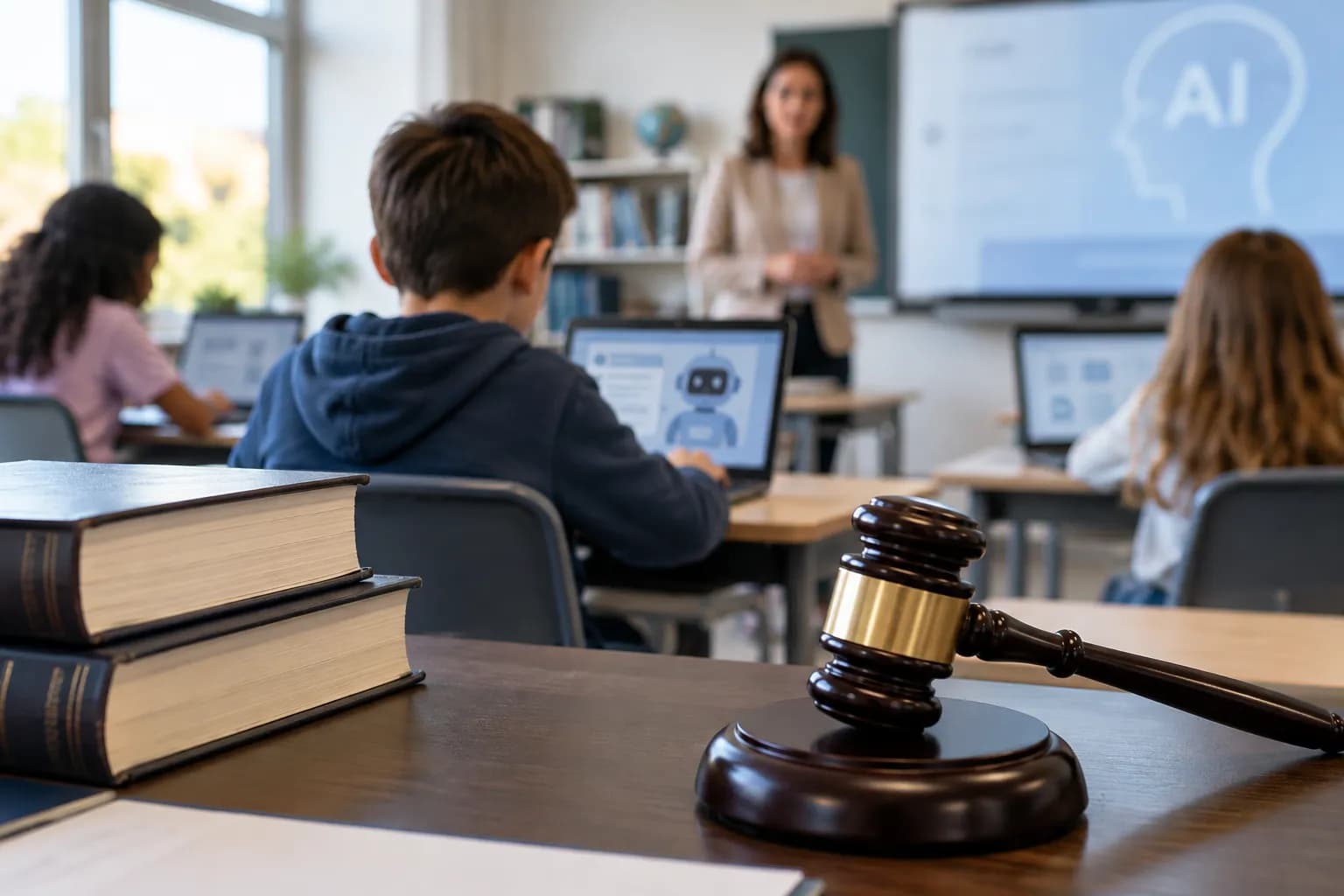
Major tech companies face a rising wave of lawsuits over their platforms' impact on children's safety and mental health as they seek to expand the use of artificial intelligence in classrooms, raising questions about their readiness to take responsibility for protecting young users.
Legal settlements and ongoing lawsuits against companies like Meta, Google, and Snap indicate that the measures these companies take to counter potential risks remain insufficient.
In the latest development, Snap secretly settled a lawsuit filed by two teenage users who claimed its technologies caused them severe psychological harm.
The settlement came days before a scheduled trial in Los Angeles, and after Meta, TikTok, and YouTube reached previous settlements with the plaintiffs in the same case.
In another development, Google faced a new lawsuit filed by the parents of a child, claiming that his use of the Gemini chatbot via Google Classroom led to a psychological crisis.
AI Increases Concerns About Children's Safety
These concerns are escalating as AI companies race toward massive market valuations, and major tech companies invest billions of dollars in developing advanced models and integrating them into educational tools.
Kate Blocker, developmental psychologist and director of research and programs at the nonprofit Children and Screens, believes that designing digital products to increase user engagement may have negative effects, especially on children and adolescents.
She emphasized the need to consider children's safety from the early stages of designing AI technologies and social media platforms, rather than waiting for harm to appear and then trying to address it.
Joseph McNally, director of emerging litigation issues at McNicholas & McNicholas, believes the recent settlements reflect an attempt by tech companies to contain legal fallout and the increasing damage to their products' and brands' reputations.
Meta, TikTok, Snap, and YouTube still face federal lawsuits, along with cases filed by school districts and legal entities in several US states. Meta also agreed in August to pay nearly $17 billion to settle a children's mental health case with a group of state attorneys general.
Google Faces Criticism Over Integrating AI in Education
Criticism was not limited to social media platforms, as Google faced objections this week to its plans to integrate AI tools in schools.
According to The New York Times, schools that ban students from using Google's AI tools may lose access to the company's search service, which Google justified by stating that the search engine and AI have become closely linked.
This coincided with the lawsuit regarding the Gemini bot, where the family's lawyers accused Google of rushing to integrate the technology into Chromebooks intended for students, despite the potential risks.
Google said it is reviewing the claims in the lawsuit, stressing that it has worked with medical professionals and academic experts to develop features that help young people access support and reliable resources when needed.
App Design May Open the Door to More Lawsuits
For decades, internet companies have benefited from Section 230 of US law, enacted in 1996, which provides legal protection for platforms regarding user-generated content. Therefore, a number of plaintiffs are currently focusing on potential harms resulting from platform design and features, rather than the published content.
This trend has extended to AI companies; OpenAI faces lawsuits from government entities and lawyers regarding the potential risks of ChatGPT's design on children.
Michele Neitz, a law professor at the University of San Francisco, believes these cases reflect tech companies' realization of higher legal risks compared to a decade ago.
Blocker also warned that the personalized and interactive nature of AI-powered chat applications makes it difficult to accurately predict what they might say to children. She stressed the need to test these products and evaluate their suitability for children's development and safety before launching them, not after harm occurs.
Child protection advocates hope these lawsuits will push tech companies to make fundamental changes in how they design their products, along with strengthening oversight and legal regulation, so that children's safety becomes an essential part of technology development, not just an afterthought to address problems.