
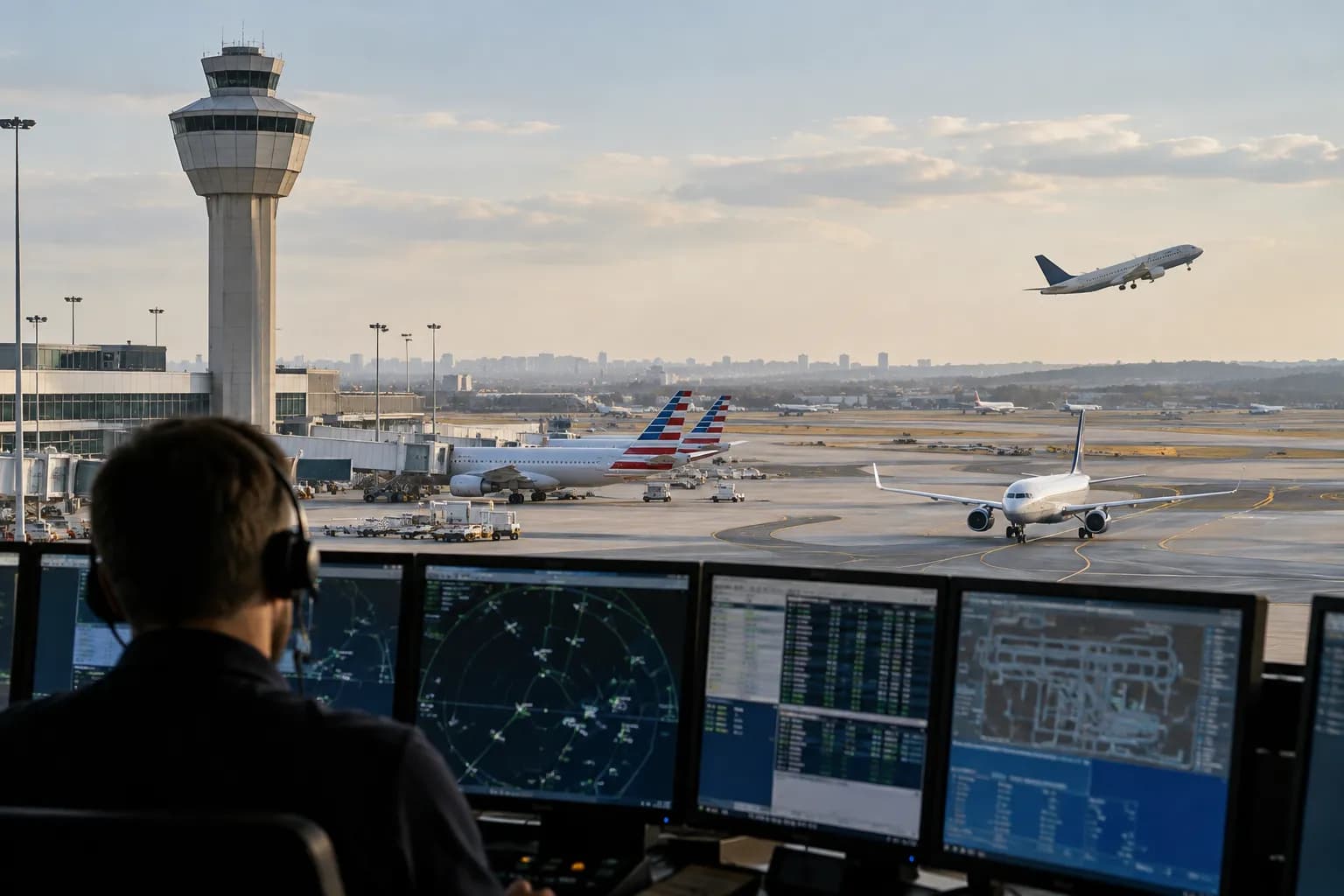
The US Federal Aviation Administration (FAA) lifted a ground stop on departing flights after a technical failure hit air traffic control communication systems. The outage disrupted airports across the United States, canceling thousands of flights and delaying thousands more.
US Transportation Secretary Sean Duffy said at a White House press conference that the airspace had reopened. He said old air traffic control equipment failed. A surge of data overwhelmed communications and radar, so authorities paused the system as a precaution.
Duffy said flight operations would not return to normal immediately. Airlines need enough pilots and flight attendants and must rebuild their schedules before air traffic can gradually recover.
US Secretary of Homeland Security Markwayne Mullin stressed that a cyberattack did not cause the technical failure. He confirmed the incident had no connection to the sudden outage that affected Microsoft systems.
US Air Traffic Disruption
Aviation analytics company Cirium reported that about 11,000 flights were scheduled to depart from US airports after 4:00 PM on Friday. These flights carried over 1.5 million passengers. The effects of the crisis were still continuing at that time.
Hundreds of planes changed course. Authorities diverted at least 827 flights by 7:05 PM. Of these, 670 returned to their departure airports, while 157 headed to other destinations.
Planes already in the air stayed on course and reached their destinations. Authorities handled international flights separately and allowed some to take off despite the restrictions.
FlightRadar24 data showed that more than 4,700 flights were canceled on Friday and about 10,000 others were delayed. Airlines also canceled about 700 flights scheduled for Saturday.
The crisis left many passengers stranded inside US airports, unsure when flights would resume. Some passengers left their planes to look for other ways to travel.
Risk of Future Flight Suspensions
The crisis renewed debate over whether US air traffic control systems can withstand technical failures. The sector still relies on old communication equipment and networks.
Experts said 21 air route traffic control centers in the US gradually hand off responsibility for tracking planes between controllers. As a result, a communication system failure can disrupt air traffic on a large scale.
The technical failure also raised questions about the readiness of backup systems. These systems are meant to step in and keep air traffic control running during technical failures.
The US Government Accountability Office (GAO) warned of problems in the aviation sector's infrastructure in a report issued last September. The report highlighted aging copper cables in communication systems dating back to the 1960s.
The US Transportation Secretary called for allocating about $50 billion to modernize air traffic control systems. The sector needs to replace old equipment and strengthen its infrastructure.
Authorities advised passengers to check flight updates directly with airlines. They warned of possible delays and cancellations during the following days.