
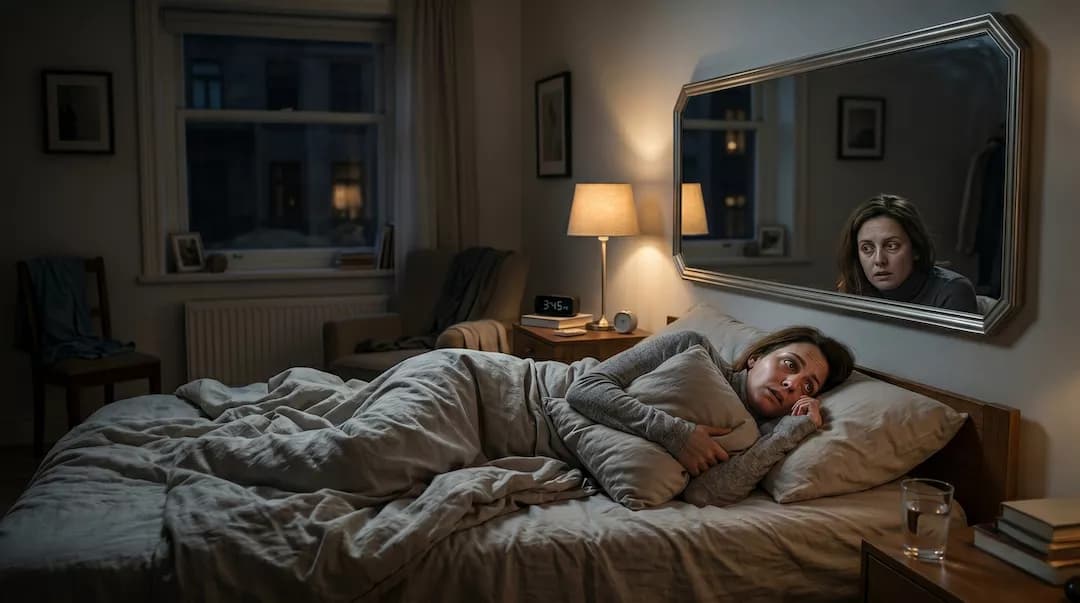
British sleep expert Charlie Davies warned of the unexpected effects of having a mirror in the bedroom, highlighting the negative impacts of this essential item on sleep quality and overall health.
She also noted that simple details in a room's design can prevent people from enjoying sufficient relaxation when going to sleep.
Not just mirrors... room arrangement enhances sleep quality
Davies explained that the bedroom should be the calmest and most organized place in the home, helping the body and mind to rest. She emphasized that clutter and excessive visual details can reduce the sense of calm during the day, which in turn affects nighttime sleep hours.
She pointed out that mirrors are among the most prominent items that can affect sleep, especially when placed facing the bed. They reflect light and movement from outside, such as car headlights or any activity outside the window, keeping the brain alert and active even during light sleep.
She also stressed that the negative effects of a mirror do not mean it must be excluded from the bedroom. Instead, it requires repositioning among other furniture pieces so it does not directly face the bed. It can be placed at an angle that allows it to be used without affecting rest.
Simple tips for a calmer sleep environment
Davies, a specialist in treating sleep disorders, noted that an abundance of reflective surfaces and crowded decor can cause stress and make the room feel less calm. This contradicts the primary goal of the bedroom as a sanctuary for resting the body and mind.
The expert offered several tips to improve the sleep environment, including placing the bed away from direct light sources, using warm and dim lighting, reducing clutter, and keeping phones away to avoid distraction before going to sleep.
She emphasized that paying attention to these simple details can significantly contribute to enhancing sleep quality and the feeling of rest.