
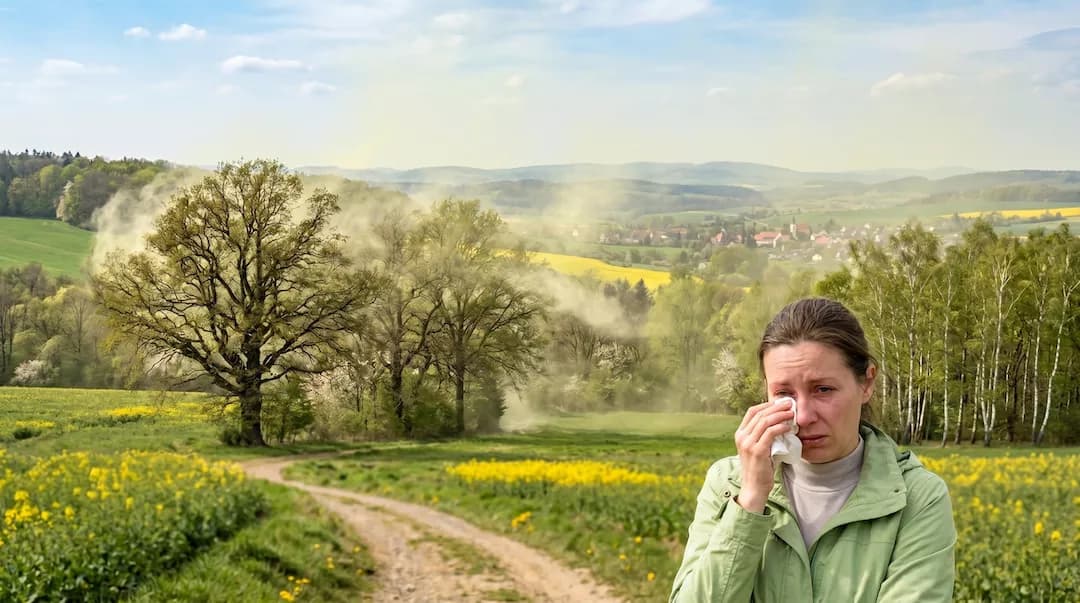
The pollen season usually coincides with spring, when flowers begin to bloom. Despite the beautiful weather during this time of year, it can cause severe suffering for people experiencing allergies and their annoying symptoms.
What is seasonal pollen allergy?
Pollen is a fine powder produced by plants such as flowers, trees, and grasses for pollination. However, this powder can cause allergies in some people, making it one of the most common types of allergies.
Allergies occur when an affected person inhales these particles. The immune system treats them as harmful substances, like viruses or bacteria, and releases chemicals to defend against them, leading to allergy symptoms.
The duration of these symptoms varies from person to person. Some sufferers experience them year-round, while they appear seasonally in others, especially during spring.
Climate change increases pollen concentration in the air
The pollen season in Europe has witnessed noticeable changes in recent years, starting earlier and lasting longer than usual, which has increased the suffering of millions of seasonal allergy patients.
Experts attribute this change to the continuous rise in temperatures and worsening carbon dioxide levels resulting from climate change. This promotes plant growth and increases pollen production in the air.
Recent studies indicate that pollen concentration is not only denser, but its season has also become longer than usual. This raises allergy rates, especially in urban areas that are also affected by pollution.
Specialists confirm that repeated exposure to pollen increases the immune system's sensitivity over time, exacerbating symptoms in sufferers.
Simple measures to relieve allergy symptoms in spring
Experts recommend several simple measures to reduce symptoms, such as closing windows during the day, showering and changing clothes after returning home, and wearing sunglasses when going out, in addition to drying clothes indoors.
Recommendations also indicate that coastal areas may be less exposed to high pollen levels, making them a better option for allergy patients during peak seasons.