
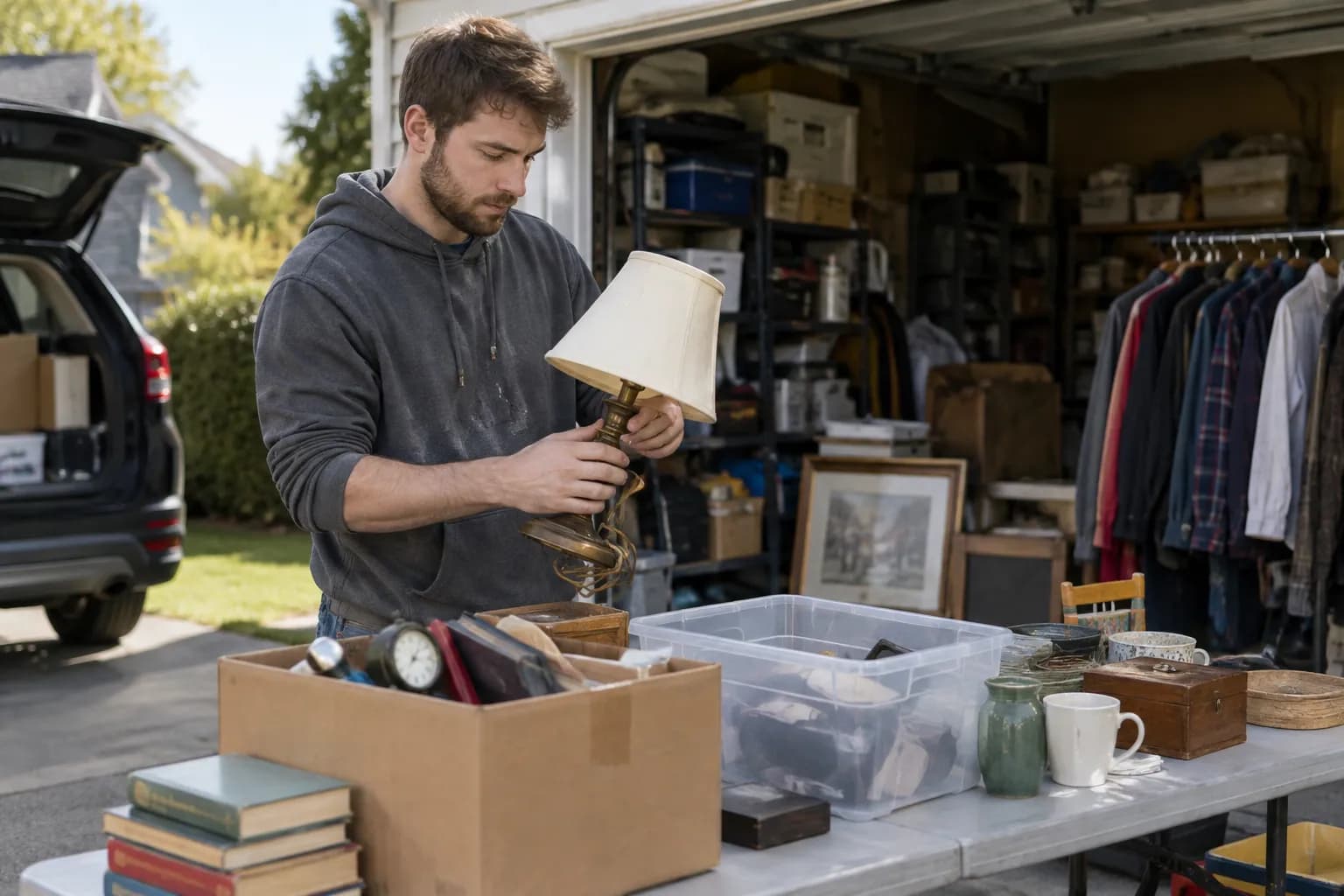
In an unconventional story combining entrepreneurship and recycling, 31-year-old American Carter Stevens managed to generate about $140,000 in sales over 12 months by collecting items discarded by others and reselling them online, turning what many consider trash into a profitable source of income.
According to a report published by CNBC Make It, Stevens achieved these sales between September 2025 and September 2026 by recovering usable items from dumpsters, cleaning and preparing them, and then listing them for sale on platforms like eBay and Facebook Marketplace.
Luxury products inside dumpsters: A starting point toward wealth
His activity is primarily concentrated around office complexes and luxury apartment buildings in Nashville, Tennessee. Since launching his experiment in March 2024, he has found a variety of valuable products, including handmade Persian rugs, luxury office chairs, and even samurai swords.
His benefit from this experience is not limited to the products he finds; he also extracts shipping and packaging supplies, such as cardboard boxes and packing tape, from dumpsters, saving him from having to buy them in about 90% of cases.
Stevens says the volume of items Americans throw away daily is unimaginable, noting that many products still in usable condition end up in the trash without their owners realizing their value.
From addiction and debt to a project generating thousands of dollars
Stevens' journey to financial success was not easy. He went through a difficult period of addiction and poor money management, accumulating about $12,000 in debt due to undisciplined spending habits.
Stevens dropped out of college in 2018 after struggling with an Adderall addiction, which made it difficult for him to secure a stable job without a university degree.
He made his first attempts to generate income by buying vintage and unique clothing from thrift stores and reselling them on eBay, inspired by YouTube content creators specializing in clothing resale.
However, the profits were unstable, and a large portion of his money went toward drugs and luxury purchases. After undergoing addiction treatment in 2021, he continued to face overspending issues.
The crisis peaked in June 2023 when he was unable to pay his rent and had to temporarily live in a rented storage unit before being evicted. He then lived in his Nissan Sentra for three weeks.
This experience was a turning point that prompted him to rethink his lifestyle and money management. In October of the same year, a relative helped him rent an apartment, and he began setting a more disciplined budget commensurate with his income from selling used products.
A used pair of shoes was the beginning of discovering the opportunity
The real turning point came in March 2024, when Stevens found a pair of black Nike Air Force 1 shoes next to a gas station.
After cleaning and sanitizing the shoes, he listed them for sale online for $35, discovering for the first time the potential to make a profit from items others throw away.
Since then, he began frequenting dumpsters in search of items suitable for resale. The experience quickly became an attraction for him after he discovered that some of these dumpsters hide high-value products.
190 office chairs made him $27,000
One of Stevens' biggest deals occurred when he found dozens of office chairs from Steelcase, a brand known for luxury office furniture.
The value of a single chair in this category exceeds $1,000 when purchased new. Stevens managed to collect 190 chairs from a dumpster at an office complex.
Using a pickup truck and a trailer he equipped himself, he transported the chairs to list them for sale online.
According to documents reviewed by the report, he sold most of the chairs in bulk deals via Facebook Marketplace for $17,000, and made an additional $10,600 from selling the remaining chairs individually, bringing total revenues to $27,600 from this deal alone.
Stevens specifically targets commercial areas and offices, finding that companies downsizing or moving to new headquarters sometimes discard large quantities of office furniture, including height-adjustable desks.
In upscale residential areas, he has also found furniture from brands like West Elm, along with iPads, electronics, and power tools that still work perfectly.
He says most of the furniture in his apartment came from dumpsters.
A profitable project, but it does not guarantee a steady income
Despite achieving significant sales, Stevens realizes this activity does not provide a guaranteed income year-round, as his profits rely heavily on finding exceptional deals.
He notes that the bulk of his revenue was generated during his five most successful months, while periods can pass without finding high-value products.
Stevens works alone and tries to reduce fuel costs by focusing on locations near his home. He also rents a storage unit for $400 a month to keep the items he collects until they are sold.
He is currently keen on saving as much of his profits as possible and avoiding unnecessary purchases. He has also started studying real estate wholesaling—which relies on securing purchase contracts for distressed properties and then assigning them to investors for a commission—as a path that could provide him with a more stable income.
However, Stevens still finds it difficult to resist his curiosity about dumpsters, believing the chance of finding a new valuable item is always there, even if he is unsure he can replicate his current profits every year.