
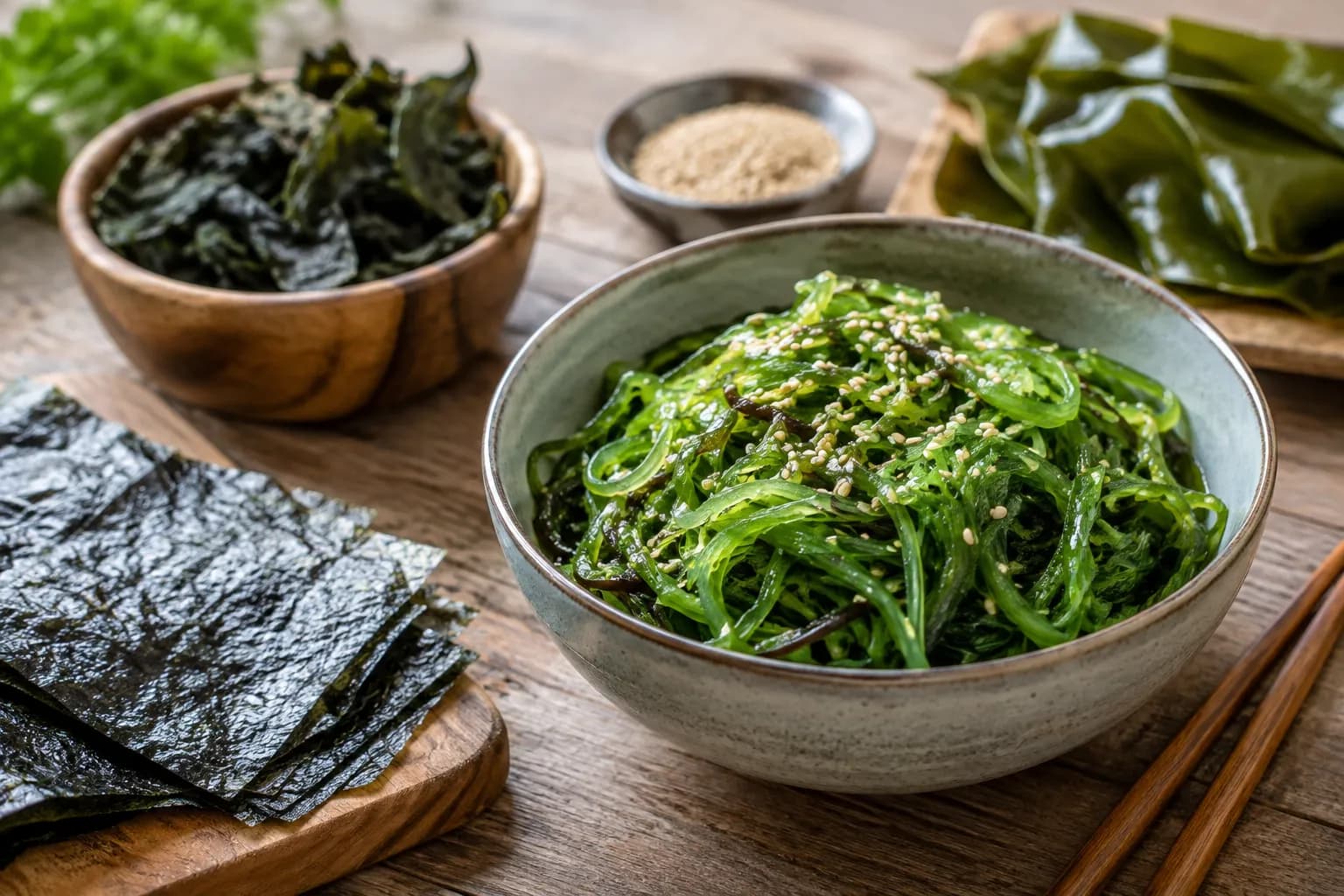
Seaweed is a nutrient-rich food, providing a variety of vitamins, minerals, and proteins, alongside important benefits for digestive health. With growing interest in it as a sustainable food source, it is gaining increasing attention in healthy diets.
Used in Japanese sushi and other Asian cuisines, seaweed comes in multiple forms, whether fresh or dried. But what makes it healthy? And what are the most prominent nutrients it provides to the body?
What is seaweed and what are its types?
Seaweed is not a plant in the scientific sense, but rather a general term encompassing thousands of different types of marine algae. Although they rely on sunlight to grow, they do not have roots, stems, or leaves like land plants; instead, they absorb nutrients directly from seawater.
There are dozens of types fit for human consumption, most notably nori, wakame, and kombu. These varieties are used in many Asian dishes and feature a rich nutritional profile.
Here are the main health benefits of seaweed, according to a report published by The New York Times.
1. Boosting digestive and gut health
Seaweed is characterized by its large amounts of polysaccharides, which are long chains of sugar molecules that form the cell walls of algae and plants.
Some of these compounds are too complex for the human body to digest on its own, making beneficial gut microbes play an important role in breaking them down and utilizing them.
In return, these polysaccharides help beneficial bacteria grow and boost their activity within the digestive system.
These microbes also ferment the polysaccharides and produce short-chain fatty acids, which are important compounds for maintaining gut health.
Shelly Wegman, a clinical dietitian at UNC Rex Hospital, explained that these fatty acids provide energy to the cells lining the intestines and help repair and maintain them.
2. A complete source of protein
One of the most prominent nutritional advantages of seaweed is that it contains all nine essential amino acids the body needs to build protein, which is necessary for muscle and tissue formation and repair.
The protein percentage varies depending on the type of marine algae. Some studies have shown that dried nori can contain up to 47% protein by weight, making it a concentrated source of protein compared to its weight, even exceeding the protein percentage found in chicken breasts when comparing the same weight.
However, the typical amounts of seaweed people consume are relatively small, so it is not expected to provide enough protein on its own to form a complete meal, as explained by Yvonne Yuan, an associate professor at the School of Nutrition at Toronto Metropolitan University.
3. Rich in iron and vitamin B12
The mineral-rich marine environment in which seaweed grows helps provide it with higher concentrations of certain nutrients compared to land plants.
The most important of these elements are iron, which the body needs to transport oxygen to organs and tissues, and vitamin B12, which is essential for forming red blood cells and maintaining nerve cell health.
These elements are particularly important for people following vegan diets, as they may not get sufficient amounts from their usual food sources.
Ingrid Undeland, a professor of food science and nutrition at Chalmers University of Technology in Sweden, noted that seaweed can help bridge some nutritional gaps related to these elements.
According to one nutritional analysis, eating 5 grams of dried nori—the amount typically found in small snack packs—can provide about 1.4 milligrams of iron.
This amount equals about 17% of the recommended daily intake for men and 8% for women, noting that pregnant women have higher iron needs.
A single sheet of dried nori can also provide about 80% of the daily requirement for vitamin B12, according to the data in the report.
4. Beware of high iodine levels in some types
Despite the multiple nutritional benefits of seaweed, consuming it requires paying attention to its iodine content, as some types may contain very high amounts of this mineral.
The body uses iodine primarily to produce thyroid hormones, which play an important role in regulating many bodily functions, but it only needs tiny amounts of it.
Therefore, overconsuming certain types of iodine-rich seaweed may lead to exceeding the amounts the body needs, which calls for moderation and attention to the type and quantity of algae consumed.
Seaweed: A beneficial dietary addition, provided there is moderation
Seaweed combines a range of important nutrients, from protein and essential amino acids to iron and vitamin B12, as well as compounds that support gut health.
However, its nutritional value varies depending on the type and processing methods, and the high iodine content in some types makes moderation in consumption important.
Consequently, seaweed can be a beneficial addition to a balanced diet, but it does not replace the need for diverse sources of protein, vitamins, and other minerals.