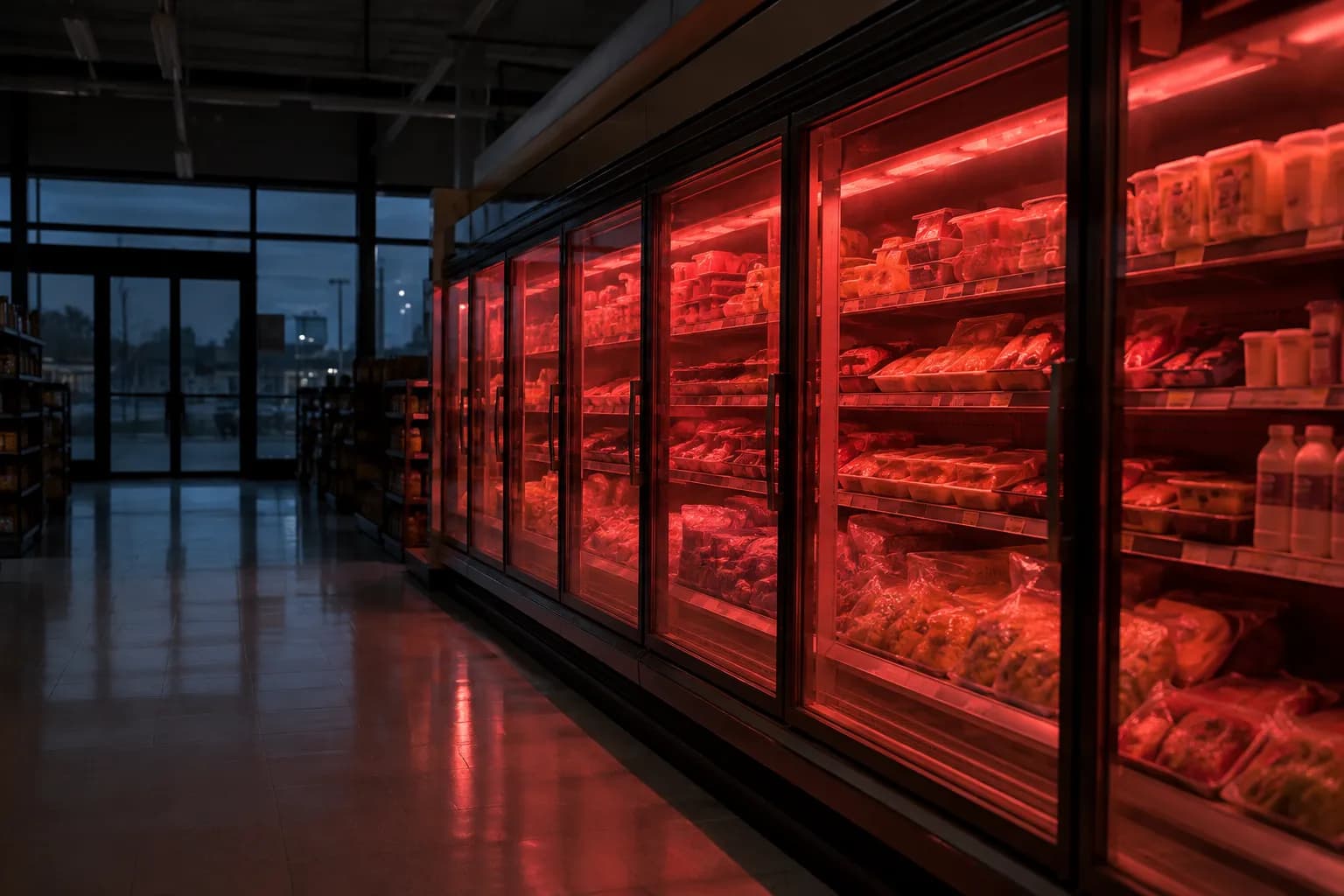
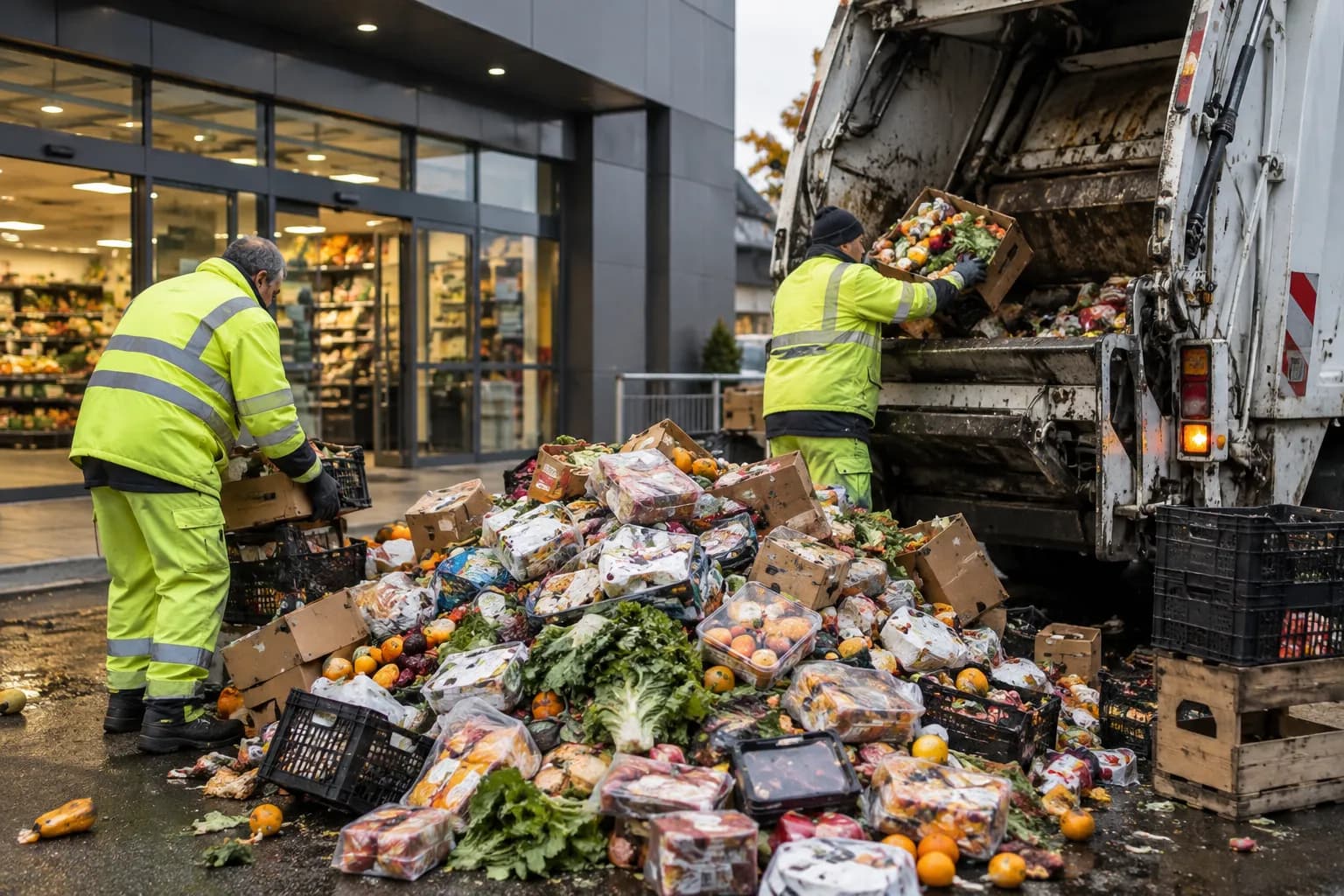
In a shocking scene that reveals the fragility of the modern technological era, a hacking group managed to seize control of food refrigerators in a massive number of major stores across Europe, twice in less than a month. This caused the destruction of tons of food and the waste of products valued at hundreds of millions of euros, turning European grocery stores into a new battleground for modern cyber warfare.
The attack occurred in two close phases. On October 11 and 12, attackers were able to remotely heat food refrigerators in about 700 French locations to levels exceeding 50 degrees Celsius. Just about two weeks later, specifically on November 2, the second wave struck at least nine other countries, including Belgium, Estonia, Finland, Ireland, Italy, Luxembourg, the Netherlands, Portugal, and Sweden, among others.
French authorities identified the mastermind behind the first breach as the "Shahid Kaveh" hacking group, affiliated with the Iranian Islamic Revolutionary Guard Corps, making it the first major sabotage attack on French soil. However, the perpetrator of the second international attack has not yet been identified.
Recent events have revealed a serious vulnerability in our connected world's systems. From robotic machines in giant factories to simple home appliances, all internet-connected devices have become vulnerable to hacking at any moment. Reports have highlighted the extent of the risks threatening our homes and the fragility of the services citizens primarily rely on in their daily lives, reflecting a realistic view of how easily the infrastructure of global communication systems can be breached.
How Did Hackers Breach Store Refrigerators Remotely?
According to specialized cybersecurity analysts, most store refrigerators operate via a central control panel connected directly to the internet, allowing specialists to monitor and adjust settings remotely whenever necessary. At the same time, smart home refrigerators operate in the same way, connecting to the internet via Wi-Fi, cellular connections, or even cloud computing platforms.
Initial investigations revealed the software mechanism hackers relied on to execute the attack, known as "Shodan," a search engine specialized in finding internet-connected devices. According to Vincent Strubel, head of the French National Cybersecurity Agency (ANSSI), the system facilitated hacking operations across three main security axes: direct exposure, weak credentials, and obsolescence.
In the first axis of this phase, internet-connected devices are discovered without relying on additional protection layers. The second phase aims to exploit exposed vulnerabilities in credentials, such as weak usernames and passwords. The third and final phase takes advantage of obsolete protection methods resulting from victims using old devices that have not received security patches for a long time.
Together, these three factors allow hackers to control systems remotely in multiple ways, including stealing account data or directly disabling functions. However, in the "French incident," they simply resorted to the built-in defrost function to generate heat.
Strubel stated: "The compromised refrigerator can act as a backdoor for hackers, allowing access to other devices suffering from the same level of security vulnerability on the same network, including laptops and various Internet of Things devices."
During his session with the French Senate, the same official warned of the risks and repercussions involved in the existence of such vulnerabilities and continuing to ignore them. He added that they could go far beyond just grocery stores, potentially reaching other more vital and sensitive services, such as the health, education, and banking sectors, all the way to biological research laboratories and pharmacy warehouses.
Are Our Homes Safe?
Theoretically, any internet-connected device is vulnerable to targeting. Given the size of the World Wide Web, which contains more than 21 billion short-range connected devices (like smartwatches) and up to 5.4 billion long-range connected devices (like surveillance equipment), the scale of damage that could be inflicted on weak systems would be akin to mass destruction in terms of losses.
Strubel cited the current usage environment of most citizens, which can include more than 15 devices connected to the network simultaneously, double the number from a decade ago.
Routers are often the central weak point that facilitates cybercriminals' access to targets. The UK's National Cyber Security Centre (NCSC) reported that hacking teams affiliated with Russian military intelligence successfully breached the protection layer of several routers in homes and small businesses. This allowed them to redirect victims to fraudulent websites specifically designed to steal their personal data.
Televisions are not immune to danger either. A recent study last June revealed that more than a third of the applications available on Samsung and LG smart TVs contain security vulnerabilities and are not subject to regular maintenance. This makes the smart TV a hidden danger for ordinary citizens who hand over their private data, such as IP addresses and geographic locations, to hackers on a silver platter.
The ecosystem of hackable targets is also completed by robot vacuums. Perhaps the closest evidence of this is a developer's discovery of security vulnerabilities allowing him to remotely control more than 7,000 DGI robot vacuums using only a PS5 console. With the help of artificial intelligence, he developed a tool that allowed him to analyze communication protocols between different units from the same company, gaining unauthorized access to live camera broadcasts, collecting audio streams, and detailed home floor plans.
Is Our Infrastructure This Fragile?
Since the escalation of political tensions resulting from the US-Iranian conflict, US agencies have issued successive warnings about cyberattacks on information systems by groups affiliated with the Iranian Revolutionary Guard, most notably the attack on more than 30 public water facilities across various states.
While the blame has not been conclusively attributed to Iran, the FBI decided not to stand idly by in the face of this disaster. It launched warning initiatives that included tightening regular oversight and maintaining digital systems at water and wastewater facilities in several US states.