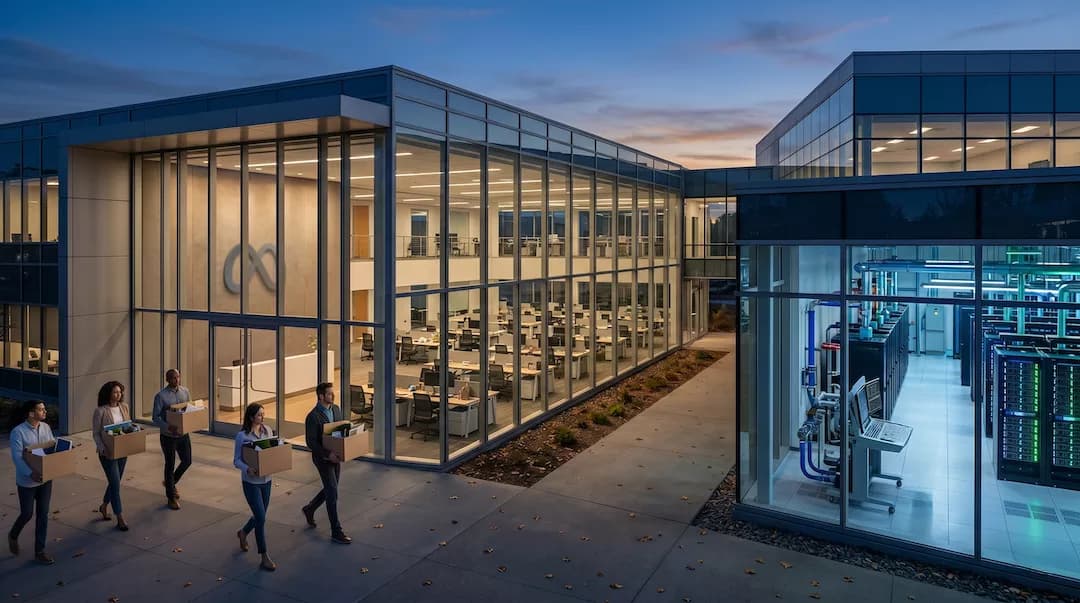
With the rapid acceleration in artificial intelligence development, pressure is mounting on global energy resources and power grids due to the massive consumption of data centers powering these technologies. However, engineers in Denmark are working to turn one of the main challenges accompanying this expansion into a new opportunity by recovering the heat generated by data center operations and reusing it to heat homes and industrial facilities.
There are currently more than 12,500 data centers worldwide, with more entering service daily. This imposes increasing burdens on energy infrastructure, consumes massive amounts of water and electricity, and contributes to higher energy-related emissions.
According to the International Energy Agency (IEA), data centers consumed approximately 485 terawatt-hours (TWh) of electricity in 2024, equivalent to 1.5% of the total global energy supply—an amount roughly equal to Germany's entire electricity production.
This figure is expected to rise to 3% by 2030, driven by the increasing expansion of AI applications and massive computing centers.
The United Nations Economic Commission for Europe (UNECE) has warned that the rapid expansion of mega data centers, operated by companies like Google, Amazon, and Microsoft, poses a growing threat to power systems worldwide.
How can waste heat from data centers be recovered?
An experiment by the University of Southern Denmark (SDU) offers a practical model for utilizing the thermal energy produced by advanced computing systems instead of venting it into the air.
In May 2026, the university launched a high-performance supercomputer named "Bitten" to serve as a primary platform for AI research across the country's academic institutions, providing advanced computing capabilities for big data analysis and complex scientific simulations.
As is the case with most supercomputers and data centers, the specialized processors in this system generate large amounts of heat during continuous, round-the-clock operation.
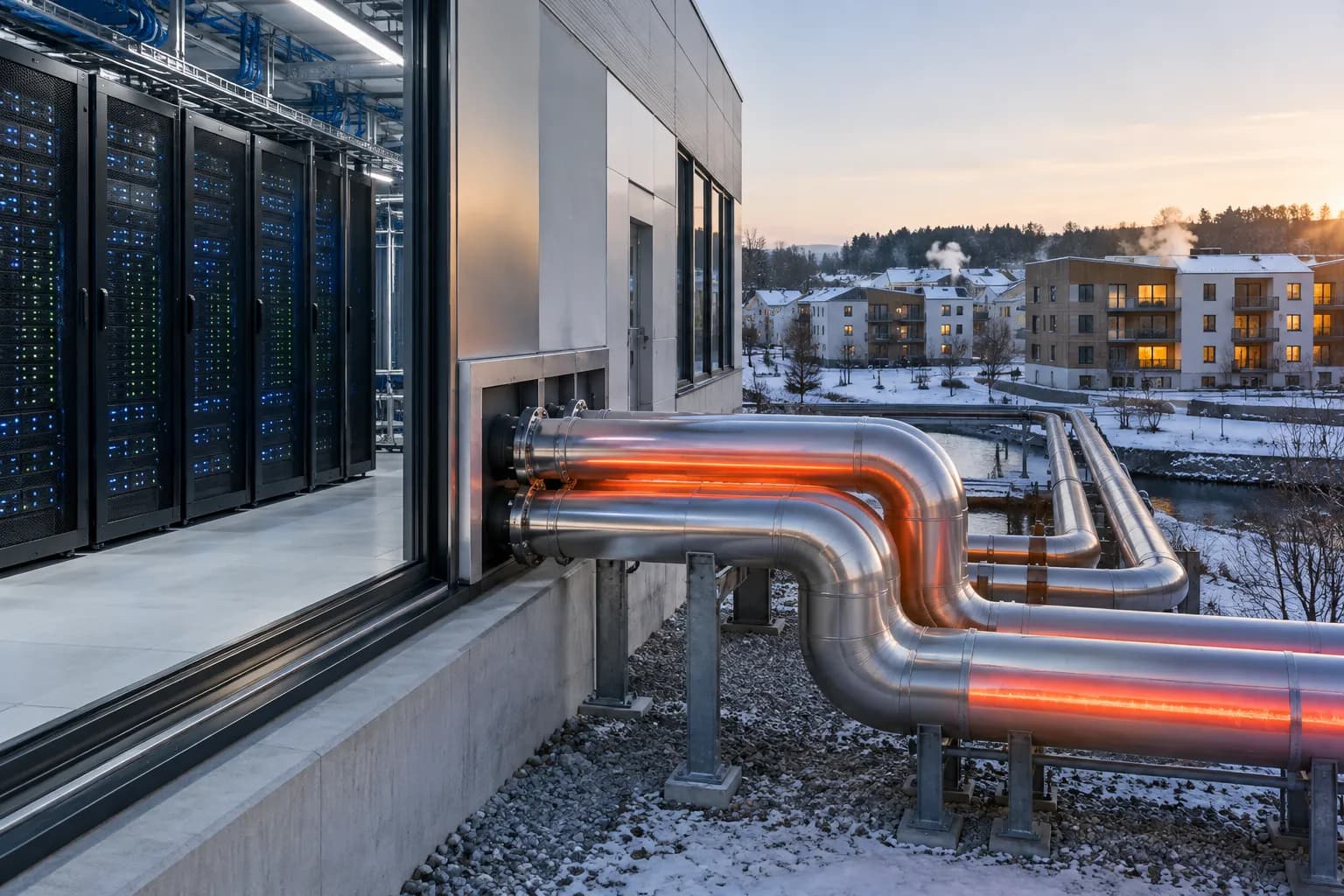
However, instead of dissipating this heat using traditional cooling systems and fans that expel hot air outside, the new system relies on an advanced liquid cooling technology developed by the Danish engineering company Danfoss.
The technology pumps coolant directly around the high-temperature processing chips to fully absorb the thermal energy generated by their operation. It is then transferred to the district heating network in the city of Sønderborg, helping provide heating for about 75,000 people.
Christian Strand, head of Danfoss Climate Solutions, explained that daily digital operations, such as taking photos or downloading documents, require running data centers, which produces a significant amount of heat that needs cooling.
He noted that the heat recovery system converts this energy into hot water that can be used to heat homes, as well as in various industrial processes.
Data centers could become energy production sources
The problem is not limited to data centers alone, as massive amounts of thermal energy generated by various industrial activities worldwide are wasted without being utilized.
According to Danfoss calculations, the waste heat in Europe over a single year could provide enough energy to power the city of Paris for 48 years, while about two-thirds of the energy used globally is lost as excess heat.
Energy experts believe that recovering this heat could play a crucial role in improving resource efficiency and reducing reliance on fossil fuels.
In this context, Jan Rosenow, professor of energy and climate policy at Oxford University, said that choosing locations for building data centers should not solely depend on low land prices, but must also consider the potential for utilizing the heat generated by their operations.
Nordic countries are leading efforts to harness this energy. Meta's data center in Odense, Denmark, recovers about 100 gigawatt-hours (GWh) of heat annually, an amount sufficient to heat around 6,900 homes.
Similarly, the Swedish city of Stockholm has relied on heat generated by data centers within its district heating network since 2014.
Hospitals and factories also benefit from waste heat
Heat recovery applications extend to other sectors, such as hospitals, factories, wastewater treatment plants, and supermarket cooling systems.
A prominent example is a project implemented by Danfoss at Sønderborg Hospital in Denmark. It replaced two high-carbon-emission gas boilers with a heat pump system that recovers waste energy from medical equipment, including magnetic resonance imaging (MRI) machines, as well as temperature control systems in operating rooms, wards, and corridors.
This heat was previously expelled outside through cooling towers, but the new system is now able to recover and reuse it. This has helped the hospital achieve energy independence for nine months of the year, with the potential to pump excess heat into the district heating network.
Lasse Bo Madsen, head of technical services at the hospital, said the project has strong economic viability and is expected to pay for itself in less than two years, allowing more financial resources to be directed toward patient care and purchasing modern medical equipment.
Can this technology help tackle the global energy crisis?
Danfoss officials believe that recovering waste heat represents a significant opportunity to improve energy efficiency and reduce carbon emissions, especially since the world already possesses a massive energy source that remains inadequately utilized.
With the ongoing AI boom and the opening of more data centers—each of which may require electricity equivalent to the consumption of a small town—developing solutions to reduce waste and optimize energy use is becoming increasingly important.
The Danish company is betting on the possibility of expanding liquid cooling and heat recovery technology to include more data centers. This would help alleviate the growing pressure on electricity supplies and transform heat, once treated as waste, into an economically and environmentally beneficial resource.